Background
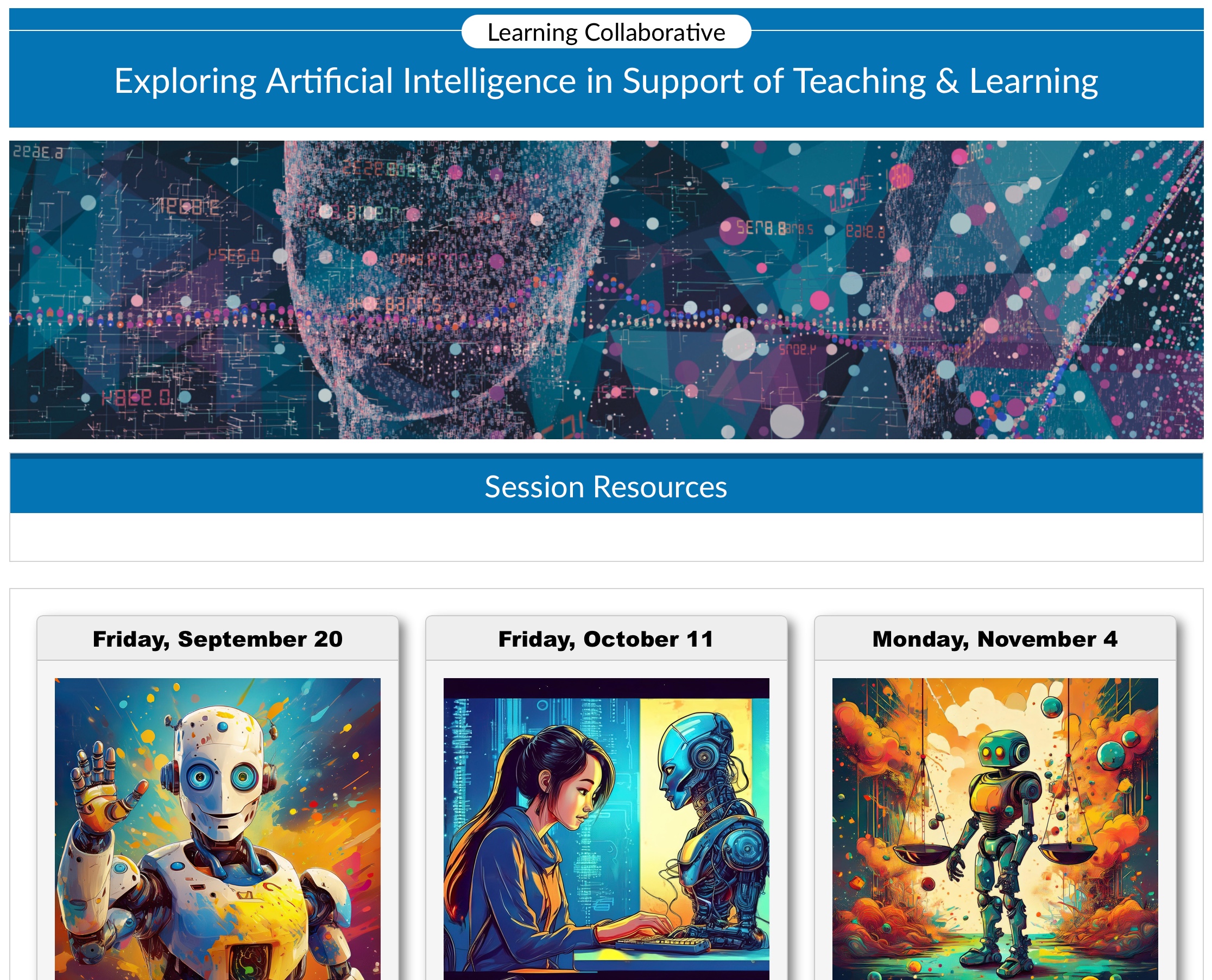
In 2023, New Trier redesigned its professional learning model around year-long, faculty-selected lines of inquiry, emphasizing experimentation, collaboration, and the impact of new practices on student learning. Each faculty member had the opportunity to explore a topic in a “learning collaborative” that was aligned with a strategic initiative, and with the rise of ChatGPT in the hands of students, the need for specific professional learning focused on AI proved to be imperative. As part of the instructional technology team, I helped design and lead a year-long learning collaborative focused on building faculty AI literacy and investigating how generative AI could be incorporated safely and effectively into teaching and learning.
Objectives
Through our learning collaborative, faculty would gain an accurate understanding of the capabilities of AI, its benefits and implications in education, and best practices for use. Through an exploration of large language models (LLMs) like ChatGPT and AI-enhanced education technology tools, faculty would grow the skills needed to navigate this new frontier in teaching and learning. The year-long curriculum was designed to meet the following goals:
- Build a practical understanding of how generative AI and large language models work.
- Develop effective prompting skills and strategies for improving AI-generated results.
- Model applications of AI in teaching and learning while providing faculty time to explore, test, and refine uses within their own professional practice.
- Connect faculty with subject-matter experts researching AI to provide additional perspectives and guidance.
- Establish best practices that could serve as a foundation for broader AI literacy, governance, and policy.
Outcomes
Learning collaboratives were designed as year-long inquiries rather than recurring courses. However, the AI collaborative was so well received—and the subject so important to the institution's evolving needs—that we were asked to lead it again the following year. It has now run every year since 2023, expanding in 2025 to two strands organized around different subject matter and areas of inquiry.
The AI learning collaborative has been instrumental in bringing AI literacy to the 400+ staff and faculty at our institution. The work from our LC (Learning Collaborative) directly helped generate AI policy, such as the AI Toolkit, for both staff and students. Every year, we gather data in the form of surveys at the beginning and end of our learning collaborative, and compare them to insititutional surveys—results spanning from 2023 until last year have shown a demonstrated improvement in understanding of AI, including a reduction of “fear of AI”, and a rise in positive behaviors such as incorporating AI policy, or integrating AI in some fashion into practice. Staff and faculty are better prepared now than they were coming into 2023 for the shift in teaching and learning caused by AI. With a strong foundation of understanding it will help anchor the work around governance in the field of GenAI and agentic workflows moving forward.